Blekinge
The EmigrantsBlekinge is a province the emigrants cross on their journey from Småland to Karlshamn, a geographical threshold between their familiar home region and the port from which they will sail to America. Its roads bring them through stories of old border hostility, a feared forest, and their first substantial rest on the way south; beyond it lies the sea, whose scale and restrictions will alter the meaning of their journey.
Position on the Emigrant Route
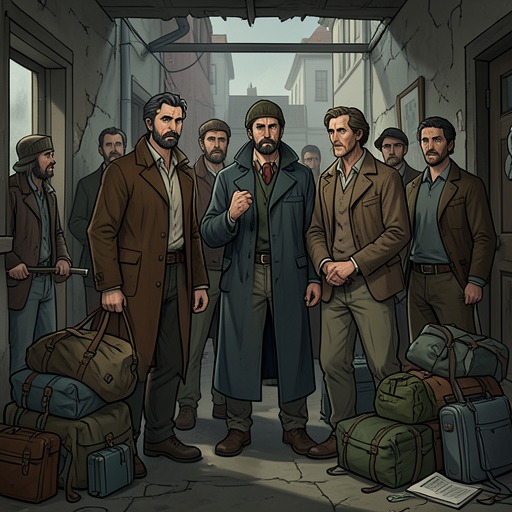
The group’s departure is part of a broader movement stirred by reports of available farmland in America, but the route is made concrete through practical arrangements. Karl Oskar and Robert have secured passage aboard the Charlotta, paid a hundred daler toward the transportation of six people, and planned to embark at Karlshamn in April. At Åkerby Junction, the emigrants gather into three wagons and continue toward Blekinge, with Jonas Petter driving first because he knows the roads. Fifty miles still separate them from Karlshamn.
The provincial boundary is also a change in the travelers’ sense of place. Jonas Petter explains that Blekinge once belonged to Denmark and that hostility had persisted between inhabitants on either side of the border. His account makes the route more than a line on a map: the emigrants are moving through a landscape remembered as contested, carrying local histories and warnings with them.
The Snake Forest and Its Stories
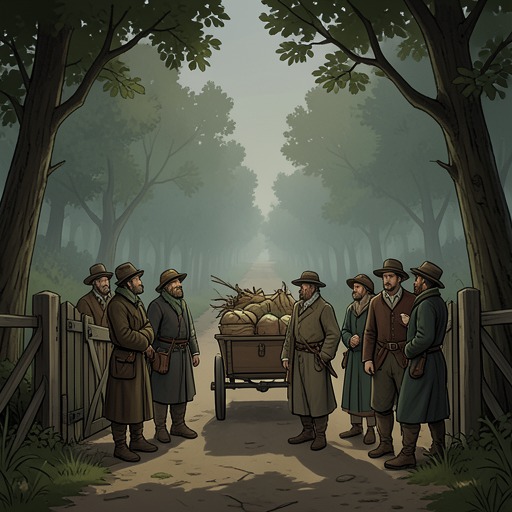
After entering Blekinge, the wagons pass through wild, sparsely inhabited country and a pine forest known as the snake forest. Jonas Petter describes its stony ground as a place where poisonous snakes were common and where men from Blekinge once hid to attack travelers from Småland. He says that blood from earlier conflicts could still be seen on the roadside stones, giving the place the weight of a remembered battleground.
Jonas Petter recounts that he himself had once been caught in a fight there. His story turns the forest from a distant local danger into a place linked to his own past, and Robert watches the undergrowth warily as the wagons pass. Jonas Petter nevertheless assures him that the road has become more peaceful and that the size of their party offers some protection. His talk helps shorten the long journey, while Robert counts and opens gates along the way.
Eringsboda and the Road to the Sea
The forest eventually gives way to a large village: Eringsboda, described as nearly halfway to Karlshamn and the travelers’ first resting place. The wagons stop outside an inn, whose wall has iron rings for tying the horses. After the long ride, the emigrants climb down sleepy and stiff; the cold has affected adults and children alike. The stop makes visible the material demands of the journey: the group must rest, and the horses that pull their wagons must be unharnessed.
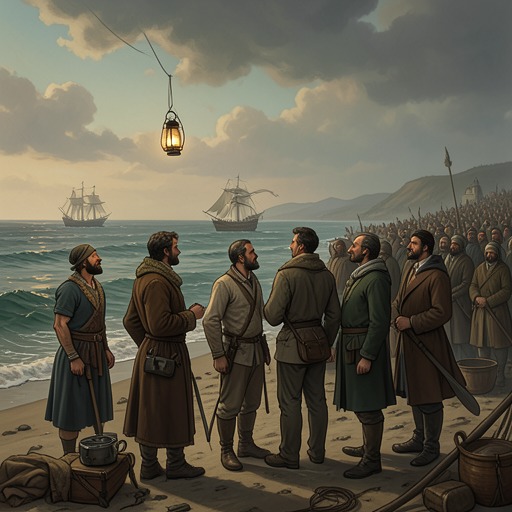
When the emigrants reach the harbor, they meet the sea for the first time without land visible on the other side. That encounter marks the end of the overland passage through Blekinge and the beginning of a different kind of exposure. The Charlotta is only forty paces long and eight wide, with nearly a hundred people expected to live, sleep, and eat aboard. Later, contrary winds and currents prolong the crossing, making the emigrants measure distance in days at sea and leaving both their homeland and their hoped-for destination seemingly remote. Blekinge therefore serves as a passage between the familiar roads of home and the uncertain, tightly confined voyage beyond them.